730 Israeli mail HACKED
2024-12-30
LHT News
The LazaGrad Hack team carried out a qualitative hacking operation targeting an Israeli email address considered sensitive, where the team was able to take full control of the account and access its entire content. The operation resulted in the discovery of more than 730 emails containing information that may be confidential or related to official and security agencies. According to what was circulated, the data obtained includes internal correspondence and important documents that may reveal details related to government agencies or sensitive institutions in Israel. The team was able to extract these messages after a complete hacking of the email, which indicates a clear weakness in the electronic protection systems adopted by some Israeli agencies.
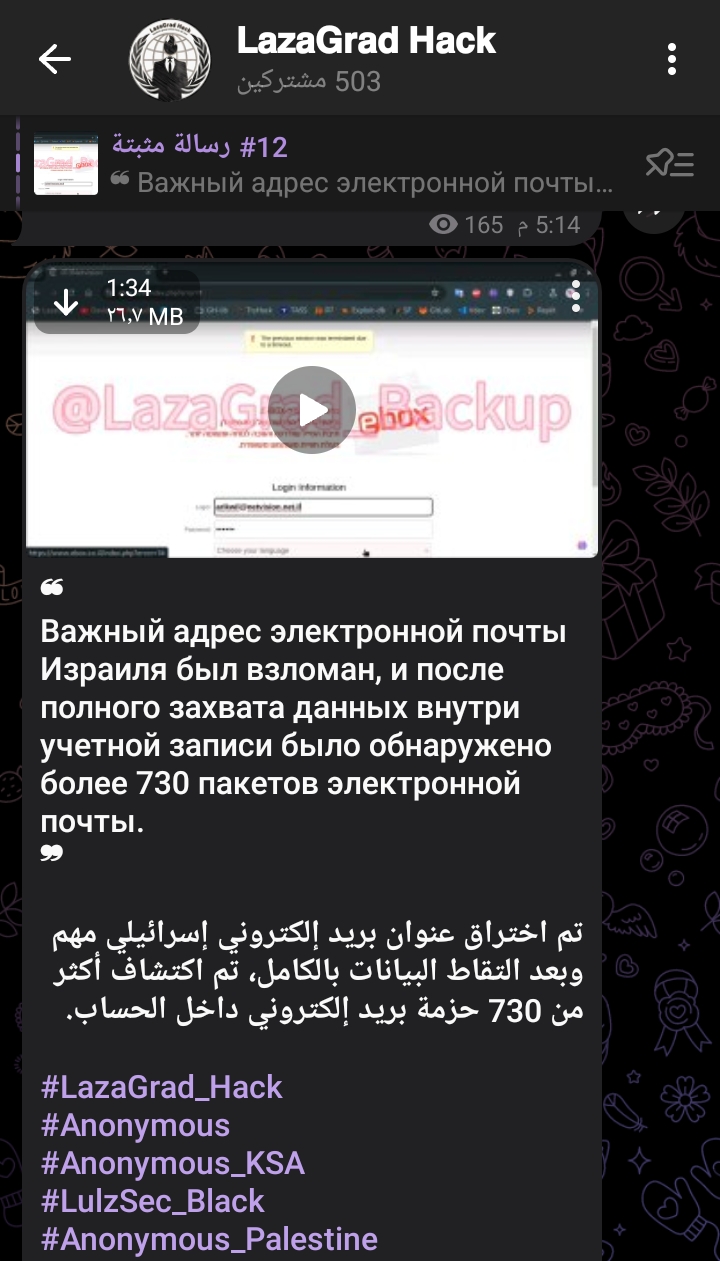
This is not the first operation of its kind by the LazaGrad Hack team, which is known for its ability to carry out precise cyber attacks targeting institutions and individuals in sensitive locations. This attack appears to be part of an ongoing campaign targeting the Israeli digital infrastructure, with the aim of exposing sensitive information and weakening cybersecurity. Analysis indicates that the messages that were accessed may contain data related to security or economic arrangements, and may include information about internal policies or future plans. This breach reflects a major failure in securing sensitive electronic accounts that are supposed to enjoy the highest levels of protection. So far, no official statements have been issued by Israeli authorities regarding the details of this breach or the extent of the damage caused by it, and the identity of the party that owns the hacked email has not been revealed. However, this operation is expected to raise great concern in Israeli security circles, especially in light of the increasing cyber attacks targeting its vital institutions. This attack is a clear indication of the development of the LazaGrad Hack team’s methods, which have become a real threat to the electronic infrastructure in the targeted countries. The pace of these operations is expected to increase in the coming period, in light of the ongoing regional tensions and the escalation of cyber wars.
 EN
EN